2026-10-23 ·
Roof Inspection Checklist After Nor'easters and High Winds
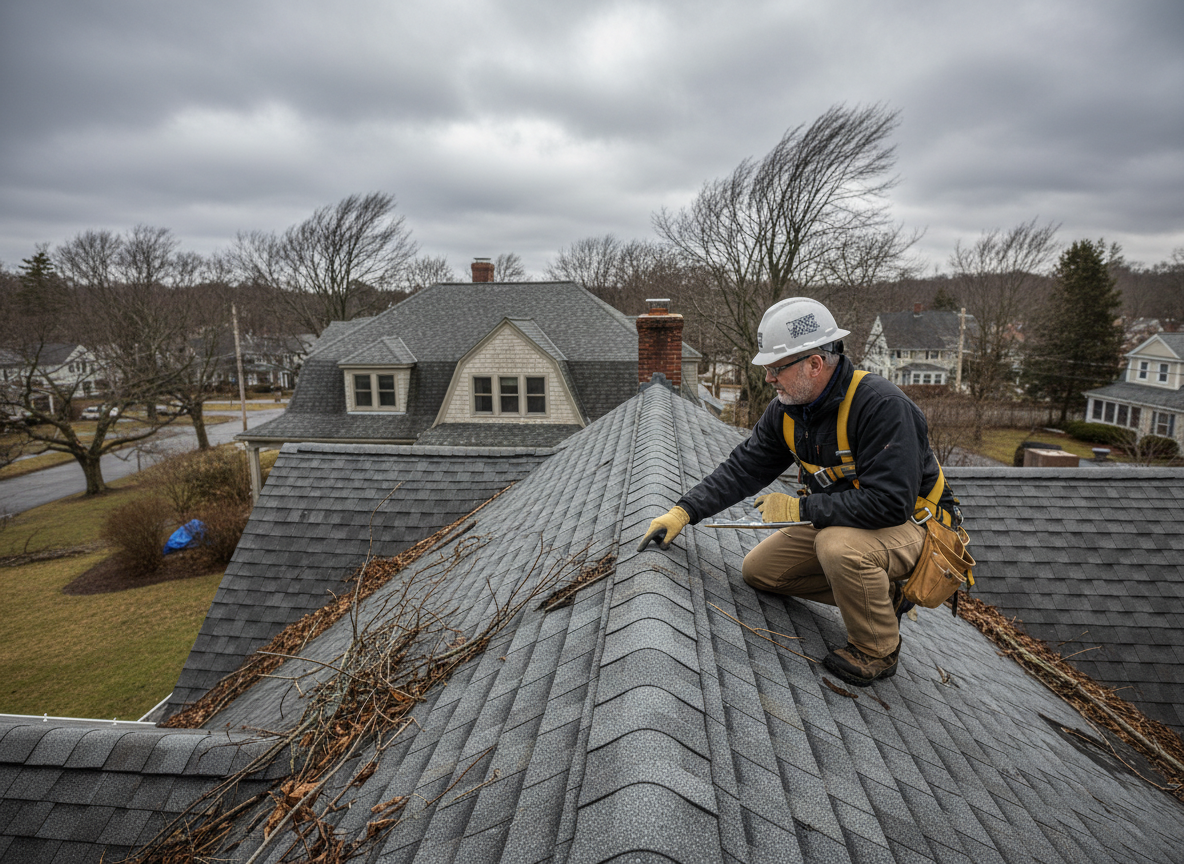
After a Nor'easter, begin your roof inspection within 48 hours while daylight and safe access remain available. Focus first on visible exterior damage from high winds that can lift shingles or loosen flashing on homes built before 1980 in Acton Center and East Acton.
Inspecting Shingles and Underlayment
Walk the perimeter and use binoculars to scan slopes facing the prevailing wind direction, typically northwest during winter storms. Look for lifted, cracked, or missing asphalt shingles, especially along eaves and ridges where wind uplift is strongest. In older neighborhoods like South Acton, check for granules collecting in gutters, a sign that the protective layer has worn from repeated wind abrasion. Lift a few shingle tabs gently by hand to verify the underlayment remains intact beneath; exposed felt or plywood indicates immediate vulnerability to the next rain event. Document every location with photos before climbing higher, since repeated foot traffic on wet surfaces risks further damage. Homes near the Great Road Historic District often feature steeper pitches that channel wind differently, requiring extra attention to the upper third of each plane.
Examining Flashing and Penetrations
Check all metal flashing around chimneys, skylights, and plumbing vents for bends, gaps, or pulled nails caused by wind-driven debris. In Boxborough and Littleton border homes, ice dams from prior storms can compound flashing failures when followed by high winds. Run a gloved hand along step flashing on sidewalls to feel for loose pieces that allow water entry during the warm summer rains that follow winter events. Replace any sealant that has cracked or pulled away, as temperatures swing sharply in Middlesex County's humid continental climate. Pay special attention to valleys where two roof planes meet, since wind can force water under misaligned flashing even when the main field remains intact.
Checking Gutters, Downspouts, and Drainage
Clear leaves and ice from gutters immediately after the storm passes to prevent overflow that saturates fascia boards. In West Acton properties with mature trees, high winds often deposit branches that block downspouts at the elbow joints. Verify that downspouts direct water at least six feet from the foundation, since saturated soil around older basements can lead to interior leaks unrelated to the roof itself. Inspect gutter hangers for bends or pull-outs; a single missing hanger allows sagging that traps water against the roof edge during subsequent storms.
Assessing Attic and Interior Indicators
Enter the attic during daylight and look for daylight spots or wet insulation near the ridge and eaves. Dark streaks on rafters or sheathing point to wind-driven rain that entered through lifted shingles common after Nor'easters. Feel for soft spots in the decking by pressing upward from below, especially in homes near Concord Road where older construction used thinner plywood. Note any musty odors that develop within days, as these signal ongoing moisture that can degrade insulation and promote mold before summer arrives.
When Professional Assessment Becomes Necessary
If you locate more than three damaged shingles per slope or any flashing separation, contact a roofing contractor for a full evaluation rather than attempting temporary fixes. Wind damage often extends beneath the surface in ways visible only from the ridge or with specialized equipment. Homeowners in South Acton and nearby Littleton frequently discover hidden issues when comparing pre- and post-storm photos taken from the ground. Review what influences the price of roof replacement in Acton to understand how storm-related repairs differ from routine maintenance. For immediate safety concerns after hours, emergency roofing service remains available around the clock from the office at 145 Great Rd STE 6, Farm Hill Plaza.