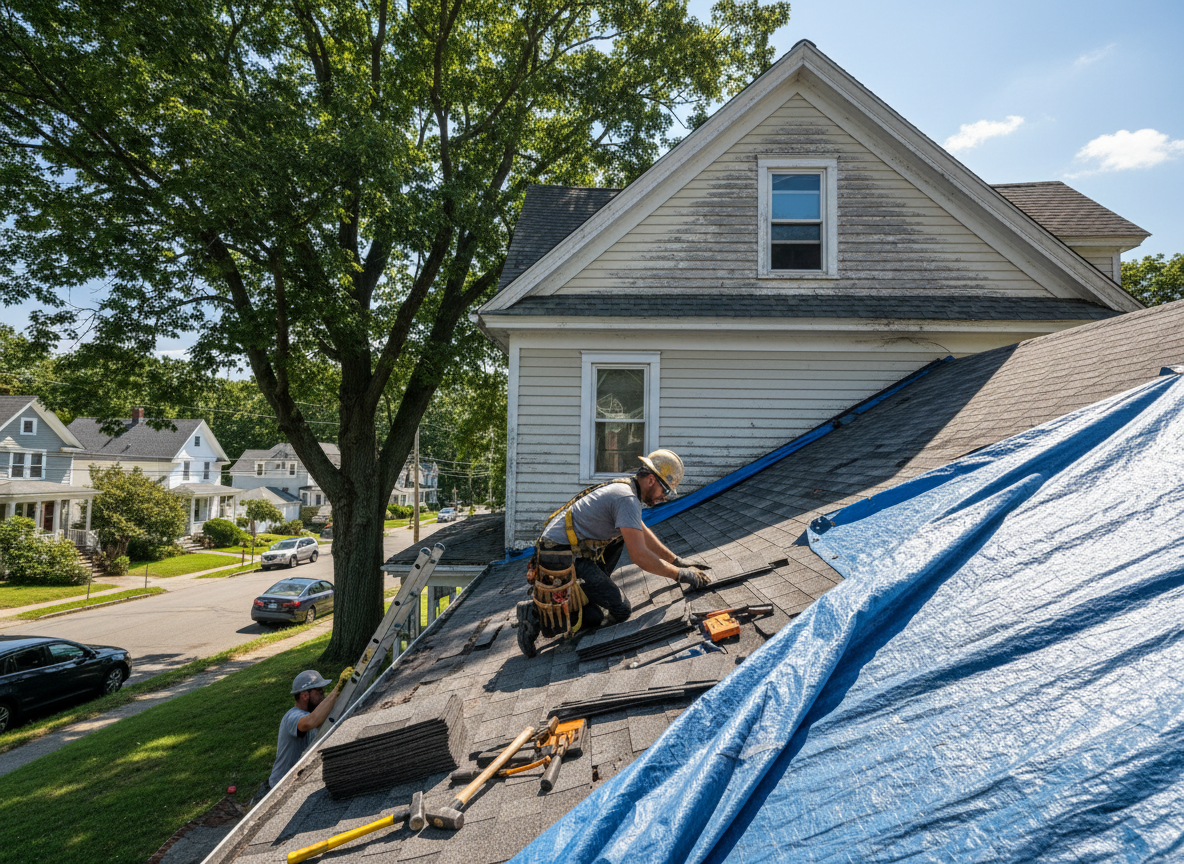
Acton sits in Middlesex County under a humid continental climate that brings heavy snow loads and rapid freeze-thaw cycles. These conditions often split shingles and push water under flashing at valleys and chimneys. Homes in Acton Center and the Great Road Historic District frequently date to the mid-1900s, so many carry original asphalt or wood shake layers that have already been patched multiple times. A repair crew must match existing materials exactly or the patch will stand out and fail faster under the next ice dam.
West Acton and South Acton properties sit on rolling terrain that funnels runoff toward lower eaves. When gutters ice over, meltwater backs up under the first course of shingles and soaks sheathing. Technicians check for rotted decking before any patch is applied, because replacing only the surface layer leaves the homeowner with the same leak six months later. Boxborough and Littleton roofs face similar exposure, so crews carry extra underlayment and ice-and-water shield on every truck.
Edge cases include slate and metal roofs common along East Acton roads near the Acton Arboretum. These materials expand and contract differently than asphalt, so sealants must be chosen for temperature swings between winter lows and summer heat. Code requires permits for any structural deck work; skipping that step risks stop-work orders from the town. Proper step flashing integration at dormers and skylights prevents the wind-driven rain that arrives with warm-season thunderstorms.
Technician insight
In Acton the thing that catches most people out with roof repair is the hidden rot behind an ice dam along the north eaves. Homes in West Acton and near the Great Road Historic District sit on slopes that hold snow longer, so the melt keeps soaking the same boards year after year. Homeowners often point to the obvious shingle tear and miss the soft decking two feet inward that will fail again next freeze.
Ice Dam Leak on North Slope
Water stains appeared on a second-floor ceiling in an Acton Center colonial after the first January thaw. Inspection revealed rotted sheathing where repeated ice dams had pushed water under the starter course. Crew removed three courses of shingles, replaced the damaged decking, added new ice-and-water shield, and reinstalled matching shingles. No further leaks occurred through the rest of the winter or the following summer storms.
How it works
- 1
Site Assessment
Technician climbs and inspects the entire slope, checking for soft spots, damaged flashing, and ice-dam evidence from prior winters.
- 2
Material Matching
Crew selects shingles or underlayment that match the existing roof age and color so the repair blends without drawing attention.
- 3
Targeted Repair
Remove damaged section, replace any compromised decking, reinstall step flashing and new shingles with proper nailing pattern.
- 4
Final Walk-Through
Homeowner reviews the patch from ground level and inside attic; any remaining concerns are addressed before the crew leaves.
Pricing
Most roof repairs in Acton fall between a few hundred dollars for a single-course patch and several thousand when decking or multiple slopes are involved; final cost depends on access, material match, and hidden damage found during inspection.