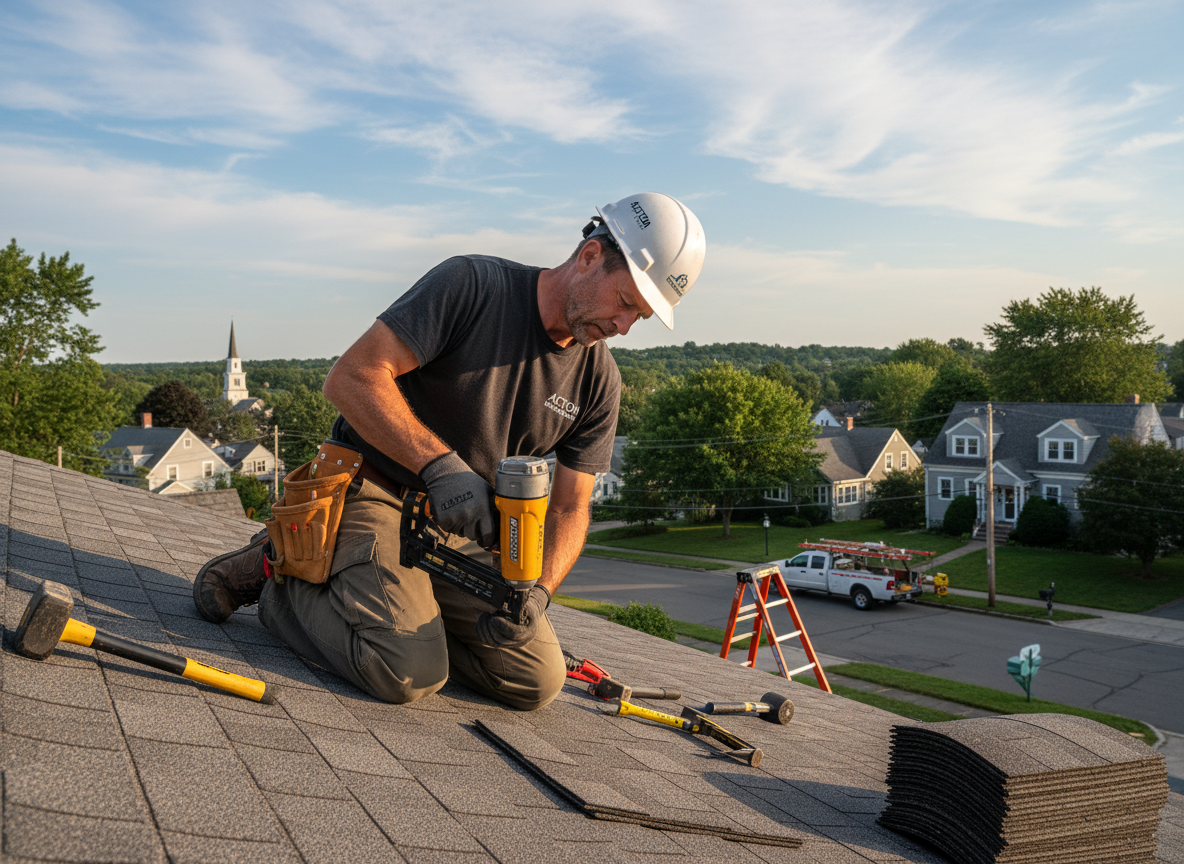
Acton homes in neighborhoods like East Acton and South Acton often feature older roof structures exposed to the region's humid continental climate. Cold winters bring heavy snow loads and ice dams that push water under shingles, especially on homes near the Acton Arboretum where tree cover traps moisture. Roofing contractors here routinely check for hidden rot along eaves and valleys that develops after repeated freeze-thaw cycles. Materials must withstand both summer heat and winter expansion without failing prematurely on these properties.
Middlesex County building practices in areas such as the Great Road Historic District require careful matching of existing rooflines and flashing details. Nearby towns like Concord and Littleton share similar terrain with gentle slopes that can direct meltwater toward foundations if gutters are not properly integrated. Local roofing work frequently involves reinforcing underlayment at penetrations to prevent leaks that surface only during spring thaws. Crews familiar with these conditions know to inspect attic ventilation before any replacement to avoid trapping humidity that shortens shingle life.
Boxborough and Littleton border properties often sit on slightly higher ground with more wind exposure, which accelerates wear on ridge caps and ridge vents. In Acton Center, many roofs date to periods when asphalt shingles were installed over older layers, creating added weight that must be assessed before new work begins. A local roofing contractor accounts for these layered conditions when planning tear-offs to prevent structural strain during removal.
Technician insight
In Acton, the thing that catches most people out with Local roofing contractor is the hidden damage from ice dams on homes built before modern ventilation standards in West Acton and around the Great Road Historic District. Older framing often cannot handle added layers without sagging once snow load returns.
Spring Leak After Ice Dam
A homeowner in South Acton noticed water stains along the ceiling during March thaw. Inspection revealed failed flashing at a valley where repeated ice dams had lifted shingles. New underlayment and flashing were installed with improved attic venting. No further leaks appeared the following winter.
How it works
- 1
Site Assessment
Walk the roof and attic to note existing layers, ice dam locations, and ventilation issues common in Acton winters.
- 2
Material Selection
Choose shingles and underlayment rated for cold-weather performance suited to Middlesex County freeze-thaw patterns.
- 3
Preparation and Removal
Protect landscaping around properties near the Great Road Historic District and remove old layers without overloading older framing.
- 4
Installation and Detailing
Install new roofing with reinforced flashing at valleys and penetrations to handle snow melt.
- 5
Final Inspection
Check ventilation, drainage, and edge conditions before leaving the site.
Pricing
Upfront quotes provided after on-site inspection of roof condition and layers.