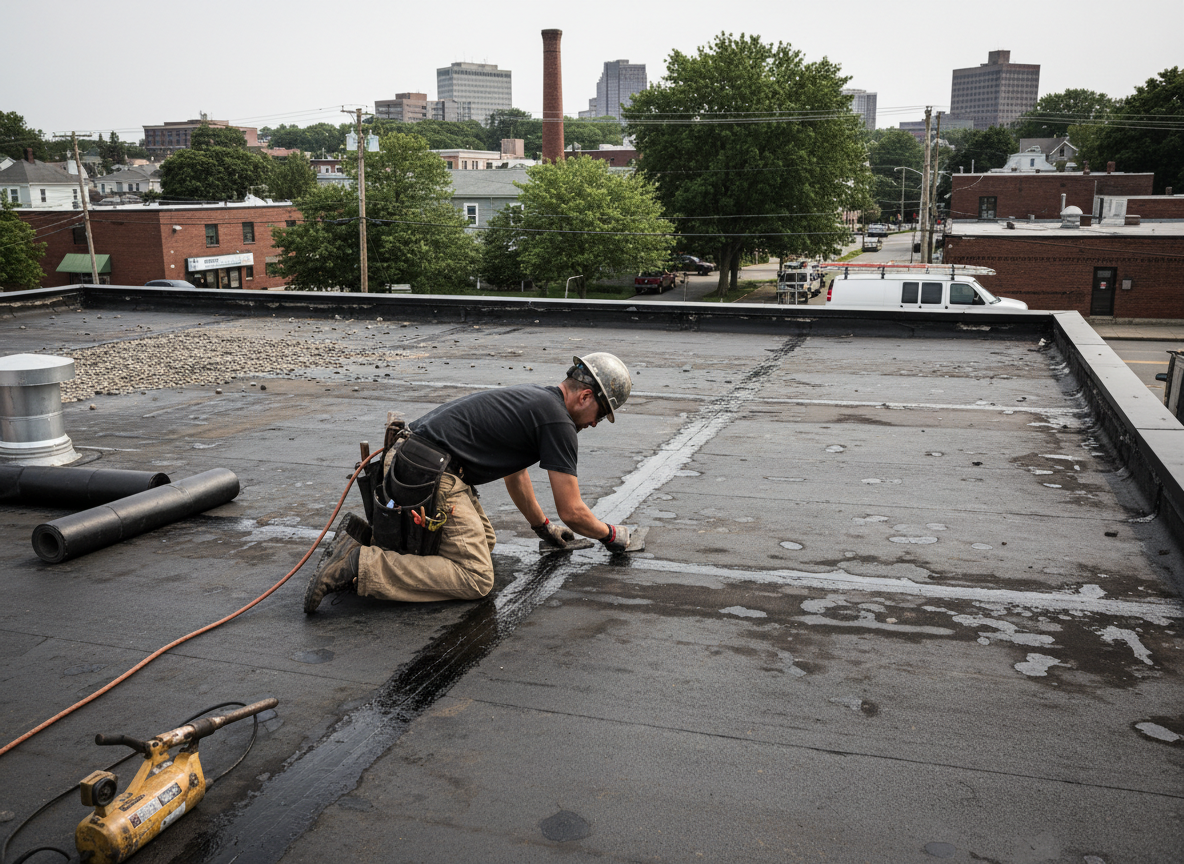
Flat roofs in Acton face unique stresses from the humid continental climate, where heavy winter snow accumulation and freeze-thaw cycles can split seams and pond water on older membrane systems common in Acton Center and Great Road Historic District properties. Many homes built before the 1980s in these neighborhoods use built-up or modified bitumen roofs that require specific patch techniques to avoid delamination when temperatures swing from single digits to above freezing. Technicians must check for hidden ice damage along parapets and drains before any surface work begins.
Repairs in West Acton and East Acton often involve matching existing EPDM or TPO materials while accounting for the steeper drainage pitches found on some ranch-style homes near the Acton Arboretum. Edge cases include penetrations from older HVAC units that have settled unevenly due to soil conditions in Middlesex County. Proper flashing integration prevents water tracking under the membrane during spring thaws, a detail missed by crews unfamiliar with local freeze patterns.
Work near Littleton and Boxborough borders demands attention to wind-driven rain that pushes water under loose flashing on commercial flat sections. Crews verify substrate integrity before applying new adhesives, since older plywood decks in South Acton homes can soften from repeated moisture exposure. All repairs follow Massachusetts building code requirements for wind uplift in this region.
Seasonal Considerations for Flat Roofs
Winter inspections focus on snow load removal and ice dam prevention along valleys, while summer work targets UV degradation and blistering on warm days. Homeowners in Concord-adjacent areas should schedule checks after major storms to catch seam separation early.
Technician insight
In Acton, the thing that catches most people out with flat roof repair is how quickly ice dams along parapets in the Great Road Historic District push water under seams during our cold winters. Homeowners often miss the hidden softening of decks on pre-1980s homes in West Acton until a spring leak appears.
Membrane Seam Failure in South Acton
A South Acton homeowner reported interior staining after a January thaw. Inspection revealed split seams on an older built-up roof where snow had ponded. Crews cut out damaged sections, installed new EPDM patches, and reinforced flashing at the edges. Drainage was restored and no further leaks occurred through the next freeze cycle.
How it works
- 1
On-Site Assessment
Inspect membrane condition, seams, drains, and penetrations while noting snow load history and drainage patterns specific to Acton properties.
- 2
Damage Documentation
Photograph affected areas and identify whether repairs involve patches, seam welding, or partial membrane replacement based on local weather exposure.
- 3
Material Matching and Preparation
Select compatible EPDM, TPO, or modified bitumen to match existing roof while preparing surfaces for adhesion in cold or humid conditions.
- 4
Repair Execution and Sealing
Apply patches or flashing, seal all edges, and test drainage before leaving the site to confirm no standing water remains.
Pricing
Upfront quotes provided after inspection; cost depends on roof size, extent of membrane damage, and material type required for Acton homes.