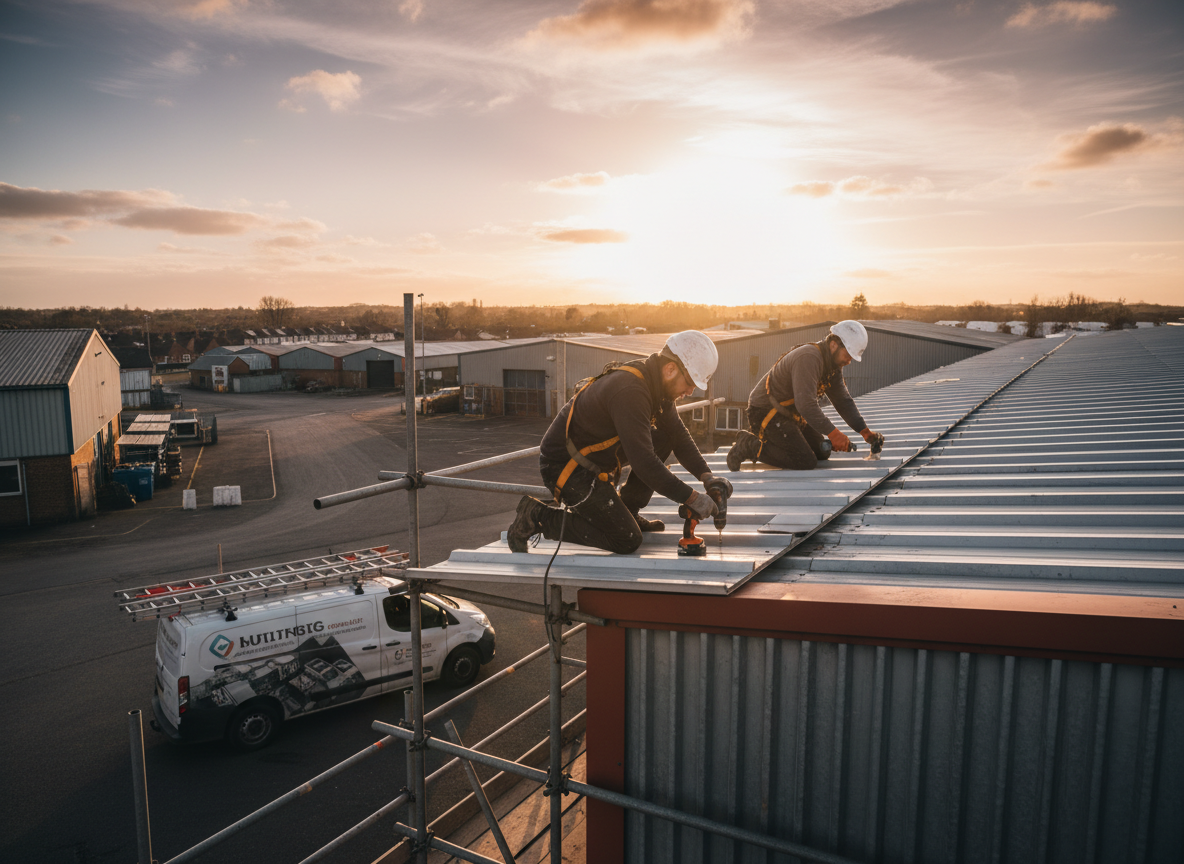
Acton sits in Middlesex County with a humid continental climate that brings heavy snow loads and freeze-thaw cycles each winter. Industrial roofs on facilities near Great Road or in South Acton must handle these shifts without leaking into equipment bays or storage areas. Single-ply membranes and modified bitumen systems are commonly specified because they accommodate expansion while resisting ice dam formation along the eaves. Proper insulation and vapor barriers also reduce condensation issues that appear when warm interior air meets cold roof decks during January thaws.
Many industrial buildings in East Acton and West Acton date from the 1970s and 1980s and feature metal decking that has begun to corrode at fastener lines. When replacing these roofs, crews must verify deck integrity before installing new insulation boards, because weakened sections can fail under the weight of snow removal equipment. Local code requires positive drainage and specific wind uplift ratings that account for open terrain around the Acton Arboretum and Great Road Historic District. Skipping these details often leads to callbacks after the first nor'easter.
Work in nearby Concord, Littleton, and Boxborough follows the same weather patterns but sometimes involves taller clear-span structures that need crane access. Industrial roofing contractors coordinate with property managers to stage materials without disrupting operations, especially when loading docks remain active. Edge details around HVAC curbs and skylights receive extra flashing layers because these penetrations concentrate water during spring rains. Owners who skip annual inspections after the first five years frequently discover seam separation that started during a single heavy snow event.
Technician insight
In Acton, the thing that catches most people out with industrial roofing contractors is underestimating how quickly snow melt refreezes on large flat roofs near the Acton Arboretum. The freeze-thaw cycles open seams on older modified bitumen systems faster than on residential slopes, and many owners skip the mid-winter inspection that would catch it.
South Acton Warehouse Roof
A warehouse near South Acton showed repeated interior leaks after heavy snow. Inspection found separated seams along HVAC curbs from repeated freeze-thaw cycles. Crew removed the top ply, added tapered insulation for better drainage, and installed a reinforced single-ply membrane. The building stayed dry through the next winter.
How it works
- 1
Site Assessment
Crew inspects the existing industrial roof, checks deck condition, and measures drainage slopes around Acton facilities.
- 2
Material Selection
Select membrane and insulation rated for Middlesex County snow loads and wind exposure.
- 3
Installation
Remove old roofing, install new layers with sealed seams, and flash all penetrations to code.
- 4
Final Inspection
Walk the roof with the owner, confirm drainage, and document the completed work.
Pricing
Pricing depends on roof size, existing deck condition, and chosen membrane; request an upfront quote for your Acton industrial building.