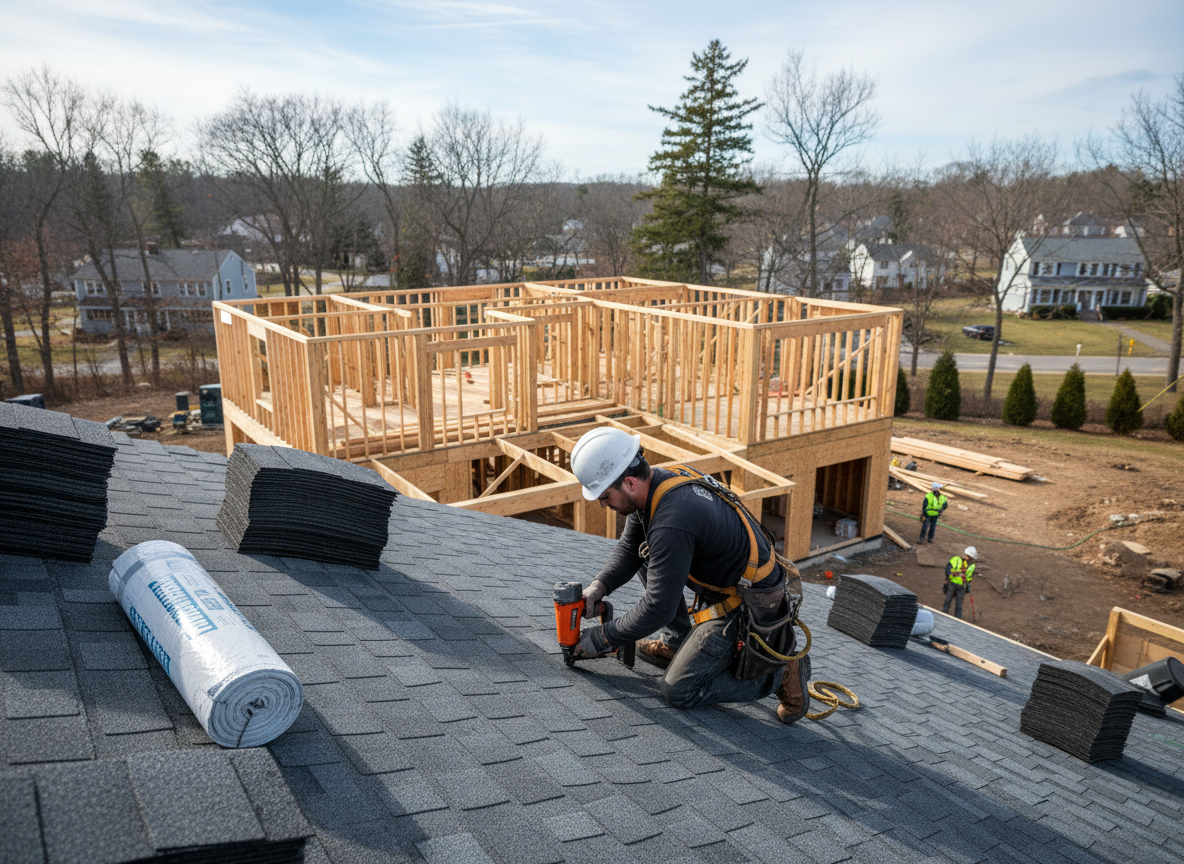
New construction roofing in Acton requires attention to the area's humid continental climate where heavy snow loads and freeze-thaw cycles are common. Proper underlayment, ice-and-water shield at eaves, and ventilation details prevent ice dams that form along Great Road and in neighborhoods like West Acton. We coordinate with builders on new homes in South Acton and East Acton to match roof pitch, attic insulation, and ridge vent placement to the specific exposure of each lot.
Material choices must account for Middlesex County wind patterns and summer humidity. Architectural shingles or metal panels perform differently on new builds near the Acton Arboretum versus open sites closer to Littleton or Boxborough. We verify decking straightness, flashing integration at valleys, and step flashing against chimneys before any underlayment goes down, because shortcuts here show up after the first winter.
Local building practices in Concord and surrounding towns often call for specific drip edge and ridge vent configurations on new construction. We align roof planes with the home's orientation to reduce heat gain in warm months while ensuring snow slides cleanly in winter. Every new roof we install in Acton Center receives full inspection of all penetrations and perimeter details before the final walkthrough.
Coordination With Builders
We work directly with general contractors on new homes to sequence roofing after sheathing and before exterior finishes. This timing prevents damage to new materials and allows proper integration of gutters and soffits typical in Acton developments.
Technician insight
In Acton, the thing that catches most people out with new construction roofing is skipping the extra ice-and-water shield runs up the valleys when the lot sits in a low spot near the Great Road Historic District. Those spots hold snow longer because of tree cover and wind patterns, and the first big melt always finds the weak seam.
New Build In West Acton
A builder contacted us about a new home on a west-facing slope where standard plans called for minimal valley protection. We reviewed the lot and found it collected drifting snow from the open field behind it. We added extended ice-and-water shield and adjusted ridge venting for better airflow. The roof has now passed two winters without ice dam issues.
How it works
- 1
Site And Plans Review
We examine architectural drawings and visit the lot in Acton to note exposure, roof pitch, and any drainage concerns created by the surrounding terrain.
- 2
Material And Ventilation Planning
We select underlayment, shingles or metal, and ventilation components matched to the home's insulation and the cold winters common across Middlesex County.
- 3
Deck Preparation And Underlayment
We confirm deck integrity, install ice-and-water shield at eaves and valleys, and apply full underlayment before any primary roofing material.
- 4
Installation And Final Inspection
We complete flashing, ridge details, and perimeter work, then walk the roof with the builder to confirm every penetration and edge meets local expectations.
Pricing
Cost depends on square footage, chosen materials, roof complexity, and any builder-driven sequencing requirements; we provide upfront quotes after reviewing plans.