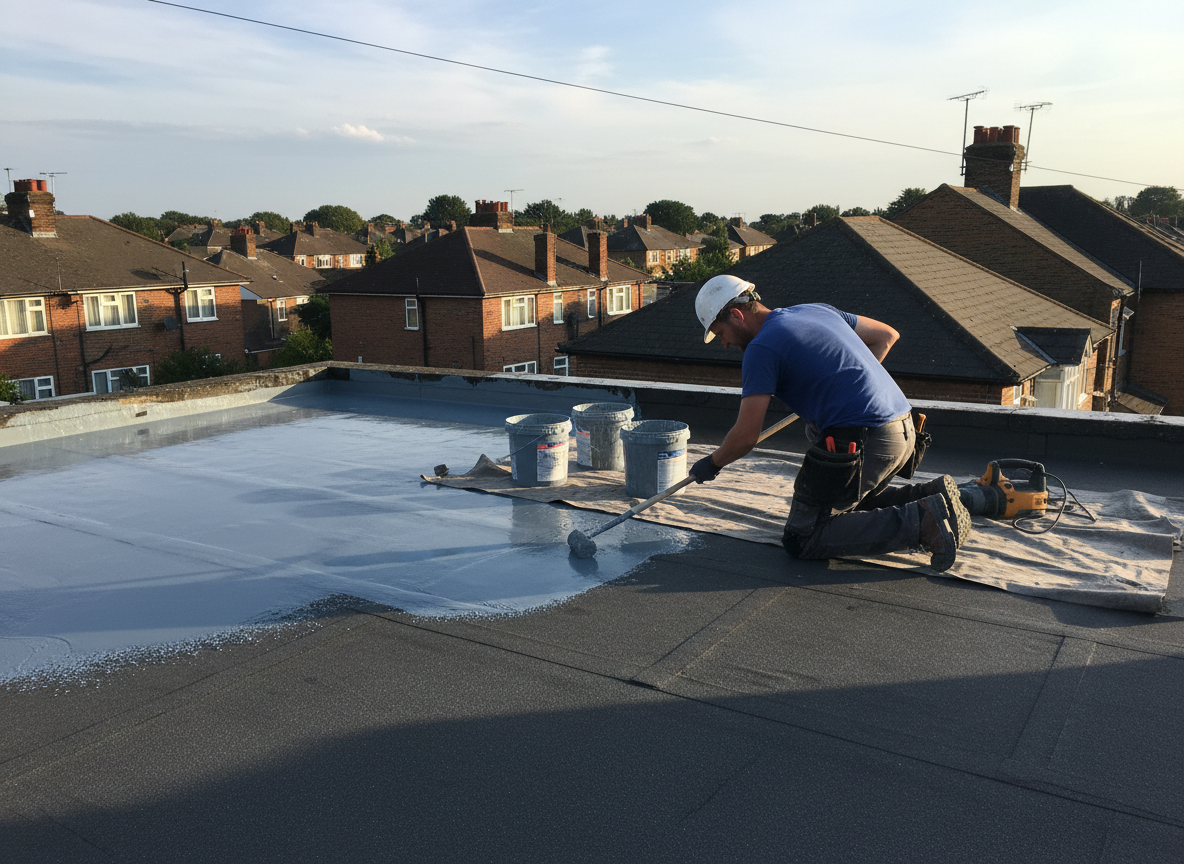
Acton homes built decades ago in neighborhoods like West Acton and East Acton often feature older roof decks that expand and contract sharply during the region's cold winters and warm summers. Roof waterproofing requires selecting membranes that bond well to these surfaces while accommodating movement without cracking. In the Great Road Historic District, where many structures sit on gently sloping terrain, water can pool near eaves if flashing details are missed during application.
Middlesex County weather brings frequent freeze-thaw cycles that push moisture under shingles on homes near the Acton Arboretum. Proper waterproofing starts with cleaning the deck thoroughly and addressing any rotted sheathing common in South Acton properties. Liquid-applied systems or self-adhered sheets must be installed with full coverage at valleys and penetrations to prevent leaks that travel into finished attics during spring thaws.
Nearby towns like Concord and Littleton share similar soil and drainage patterns that increase basement moisture when roof water is not redirected properly. Waterproofing crews here routinely add extra layers at skylight curbs and chimney bases because wind-driven rain during summer storms finds gaps that standard underlayment misses. Homeowners in Boxborough often discover that skipping edge detailing leads to ice dam damage once temperatures drop below freezing for extended periods.
Edge cases include metal roof transitions on farm-style homes scattered through Acton where dissimilar materials create condensation points. Experienced crews use compatible primers and sealants rated for the local temperature swings rather than generic products that fail after one harsh winter.
Technician insight
In Acton, the thing that catches most people out with roof waterproofing is how quickly ice dams form on older homes in the Great Road Historic District once winter temperatures drop. Homeowners often skip extra underlayment at the eaves, then wonder why water shows up in the attic after the first thaw. The terrain around South Acton and West Acton funnels meltwater right back under the shingles if the bottom three feet are not fully sealed.
Ice Dam Leak on West Acton Cape
Water stains appeared in the upstairs ceiling after a January thaw. Inspection showed missing underlayment at the eaves on a 1960s cape where prior repairs had used standard felt that had curled. We stripped the lower courses, installed a self-adhered membrane extending four feet up the roof plane, and replaced damaged shingles. No further leaks occurred through the remaining winter or the following spring melt.
How it works
- 1
Inspection and Assessment
Examine roof deck condition, identify water entry points, and note any ice dam history common in Acton winters.
- 2
Surface Preparation
Remove debris, repair damaged sheathing, and ensure the deck is dry before applying waterproofing materials.
- 3
Membrane Application
Install self-adhered or liquid-applied waterproofing with full coverage at valleys, eaves, and penetrations.
- 4
Flashing and Detailing
Reinforce edges, skylights, and chimneys with compatible sealants to handle freeze-thaw cycles.
- 5
Final Review and Cleanup
Check for complete coverage and remove all job debris from the property.
Pricing
Cost depends on roof size, slope, and existing damage; upfront quotes provided after inspection.